When you hear the word “mink”, what comes to mind? For some it’s the sumptuous allure of a fur coat dripping from a fashion runway. For others, it’s the whisper of controversy — an emblem of heated debates about ethics, conservation and animal welfare. Peel back layer after layer, and en mink — literally “a mink” in languages like Danish — opens into a world where biology, culture, commerce, and ethics collide with surprising intensity.
This piece is not merely about a creature; it’s about what that creature has come to mean to humanity.
Chapter One: The Animal Itself — Biology, Behavior, Habitat
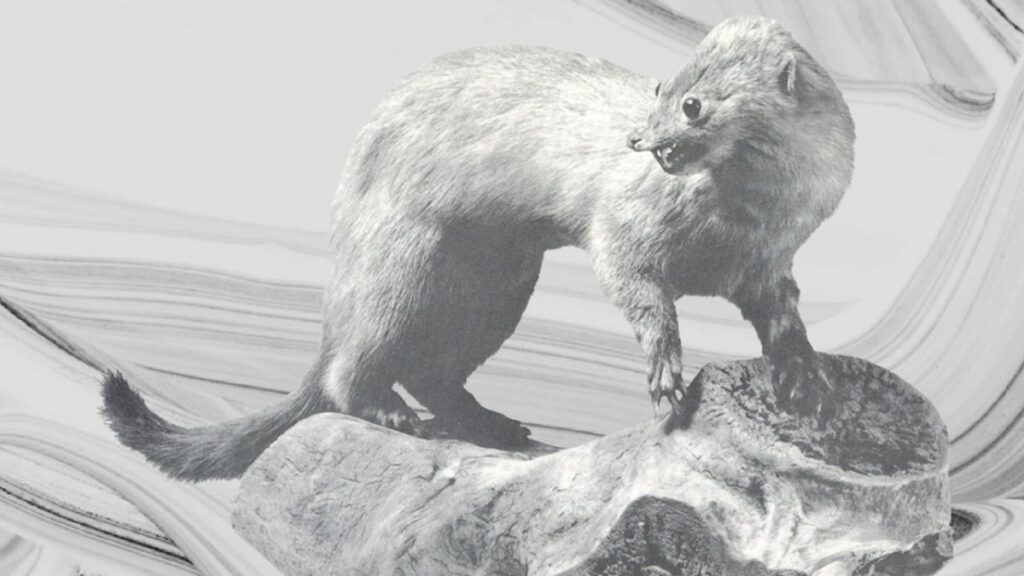
At first glance, a mink might not seem remarkable — a small, semiaquatic mammal, slender and unassuming. But in every detail, from coat to claw, it’s a marvel of evolutionary refinement.
Anatomy of a Predator
Minks belong to the Mustelidae family — a lineage that includes ferrets, otters, and weasels. They have:
-
A long, muscular body with a sleek, tapered silhouette that screams grace in motion.
-
Short legs and webbed feet, adaptations that make them nimble swimmers and proficient hunters.
-
A dense, water‑repellent coat, with an oily underlayer that helps them stay insulated even in icy streams.
-
Sharp teeth and keen senses that make them skilled carnivores in both land and water.
Though they aren’t large — averaging around 30‑50 cm (about 12‑20 inches) in body length with a tail adding another 13‑23 cm (5‑9 inches) — these animals are formidable in their domain.
Semi‑Aquatic Lifestyle
Minks are most often found near rivers, streams, lakes and marshlands, where they perch like dark silhouettes against reeds, scanning for prey. Their lives are tied to water in every way:
-
They swim with fluid precision, sometimes diving meters deep.
-
Their diet is opportunistic: fish, amphibians, crayfish, rodents and birds all find themselves on the menu.
-
Their coats are oily and insulating — not just beautiful, but remarkable adaptations to these chilly, liquid realms.
These behaviors reflect a creature that is comfortable at the intersection of land and water — a spectacular survivor, not merely a fur‑bearing mammal.
Mink in the Wild: Solitude and Territory
One of the most striking things about minks is their solitary nature. Unlike pack‑living mammals or social primates, minks stake out exclusive territories. They use scent marking — powerful odorous secretions — to stake their claims and communicate reproductive status.
This fierce territoriality, combined with their hunting prowess, paints a picture of en mink as a solitary, efficient, rugged creature — a far cry from the romanticized fur coat at a gala.
Chapter Two: Mink and Humans — From Survival to Luxury
It is perhaps the most dramatic twist in the story: a wild animal, evolved for survival, transplanted into human culture — not as companionship, not as beast of burden — but as a symbol of luxury.
The connection between minks and humans dates back centuries, but the ascension of mink into the fashion stratosphere is a more recent phenomenon.
From Furriers to Fashion Capitals
In medieval and Renaissance Europe, fur was already a status symbol — but mink, with its density and luster, quickly rose above many of its competitors. Over time:
-
Its soft underfur and sleek guard hairs made it prized for warmth and elegance.
-
By the 20th century, mink fur had overtaken other furs as the most sought‑after in the international market.
-
Designers used mink for coats, stoles, cuffs, collars, and accessories that communicated wealth and refinement.
In certain regions — like parts of Northeast China — mink fur was considered among the “Three Treasures,” a symbol not just of warmth but of social status and economic success.
The Anatomy of a Luxury Commodity
To the fashion world, mink fur is celebrated for several qualities:
-
Softness and warmth — its density traps heat more effectively than many materials.
-
A natural sheen — the glossy guard hairs catch the light in ways synthetic materials struggle to replicate.
-
Durability — with careful care, a mink fur garment can remain luxurious for decades.
No wonder that mink coats, in their pomp, became power uniform: fierce, glamorous, boundary‑pushing.
Chapter Three: The Economics and Ethics of Mink Farming
But here’s where the narrative gets complicated — and uncomfortable.
Fur Farming: A Global Industry
To supply the global market, humans began breeding mink on farms — scaled operations where selective breeding produces both quantity and diversity in fur color and texture.
This shift from trapping wild animals to industrial farming wasn’t merely about economics — it revolutionized the mink’s relationship to humanity.
Today, millions of mink are raised each year for their pelts. Their lives are measured less in years and more in coat quality. On farms:
-
Minks are bred once a year.
-
They live in small wire cages, often without exposure to natural environments.
-
When their fur reaches peak quality in winter, they are slaughtered — usually at around 6‑8 months old.
It’s a factory process — efficient, industrial, controversial.
Public Health and Pandemic Concerns
The ethical debate over fur farming intensified dramatically with the COVID‑19 pandemic. Mink farms emerged as sites of viral transmission, both among animals and between species. This public health dimension prompted legislative responses:
-
In 2022, the US House of Representatives passed a bill to ban commercial mink farming — though it stalled in the Senate.
-
In British Columbia and elsewhere, authorities have moved to phase out the mink industry on health grounds.
The crisis highlighted something troubling: tightly packed cages of genetically similar individuals are not only ethically fraught — they are biologically vulnerable.
Animal Welfare: The Heart of the Debate
Animal rights organizations argue that mink farming is inherently cruel. These arguments center around:
-
Confinement stress — minks are active, intelligent hunters; confinement in wire cages crushes their natural behaviors.
-
Psychological trauma — stereotypic behaviors and signs of distress in captive animals have been noted by activists.
-
Slaughter methods — methods used on some farms range from gassing to other means that animal welfare groups deem inhumane.
For critics, the luxury of a fur coat is inseparable from the suffering behind it.
Chapter Four: Conservation — Wild vs. Farmed Mink
A surprising twist in the mink story is the very uneven conservation status between wild and farmed populations.
American Mink: Least Concern — But Not Without Problems
The American mink (Neovison vison) — the species most commonly associated with the fur industry — is classified as Least Concern by the IUCN, mainly due to its wide range and numbers in the wild.
But that broad classification conceals nuance:
-
Wild populations are stable, but localized declines occur due to habitat loss and trapping.
-
Farmed mink that escape can establish wild populations, sometimes becoming invasive, disrupting local ecosystems and threatening native species.
European Mink: A Different Story
Contrast that with the European mink (Mustela lutreola), once widespread across the continent. Today, it’s critically endangered thanks to habitat loss and competition from the more adaptable American species.
This contrast — one species abundant, another teetering on the brink — raises profound questions about human interference and ecological balance.
Chapter Five: Cultural and Linguistic Footprints
Even in language, “mink” leaves traces. In Danish, en mink simply means “a mink,” but it also carries connotations of fur and fashion when translated into English contexts.
Across subcultures, memes and popular media, mink fur frequently pops up:
-
In fashion circles, it’s shorthand for opulence.
-
In hip‑hop lyrics, it’s symbolic of status and flamboyance.
-
In online communities, fur identification questions crop up regularly — often prompting debates over authenticity and ethics.
In each case, the word is more than a label — it’s a cultural signifier.
Chapter Six: Alternatives and the Future
So where does en mink go from here?
The Rise of Faux and Sustainable Fur
As awareness grows, designers and consumers are turning toward alternatives:
-
Faux fur — once derided as cheap — now rivals real fur in texture and sustainability.
-
Lab‑grown pelts and bioengineered materials promise cruelty‑free luxury.
-
Some fashion houses have abandoned animal fur entirely, redefining what high luxury can look like.
These changes reflect a broader shift in values: from dominance over nature to stewardship with nature.
Legislative and Ethical Movements
In several jurisdictions, laws increasingly restrict mink farming or fur sales. Activism and consumer preference pressures are reshaping markets that once seemed immovable.
Here’s the deeper truth: the future of mink — both as species and cultural symbol — will be defined not by its coat, but by how humanity reimagines its relationship with other creatures.
Epilogue: En Mink — What It Really Represents
En mink is more than an animal. It has become a lens:
-
For evolutionary biology — an elegant predator perfected for semiaquatic life.
-
For culture — a symbol of wealth, identity and the artifice of value.
-
For ethics — a flashpoint in humanity’s debate over how we treat the vulnerable.
-
For sustainability — a reflection of how we reconcile luxury with responsibility.
At every turn, the story of the mink pulls us into deeper questions of what we value — and at what cost.